
Encounter 04 · 04 of 42 · 9 January 1909
Ninety-seven miles
On 9 January 1909 four men turned toward home. The Pole was still there. So was the food they did not have.
88°23′ S, Antarctic Plateau · place approximate
Listen · Eve
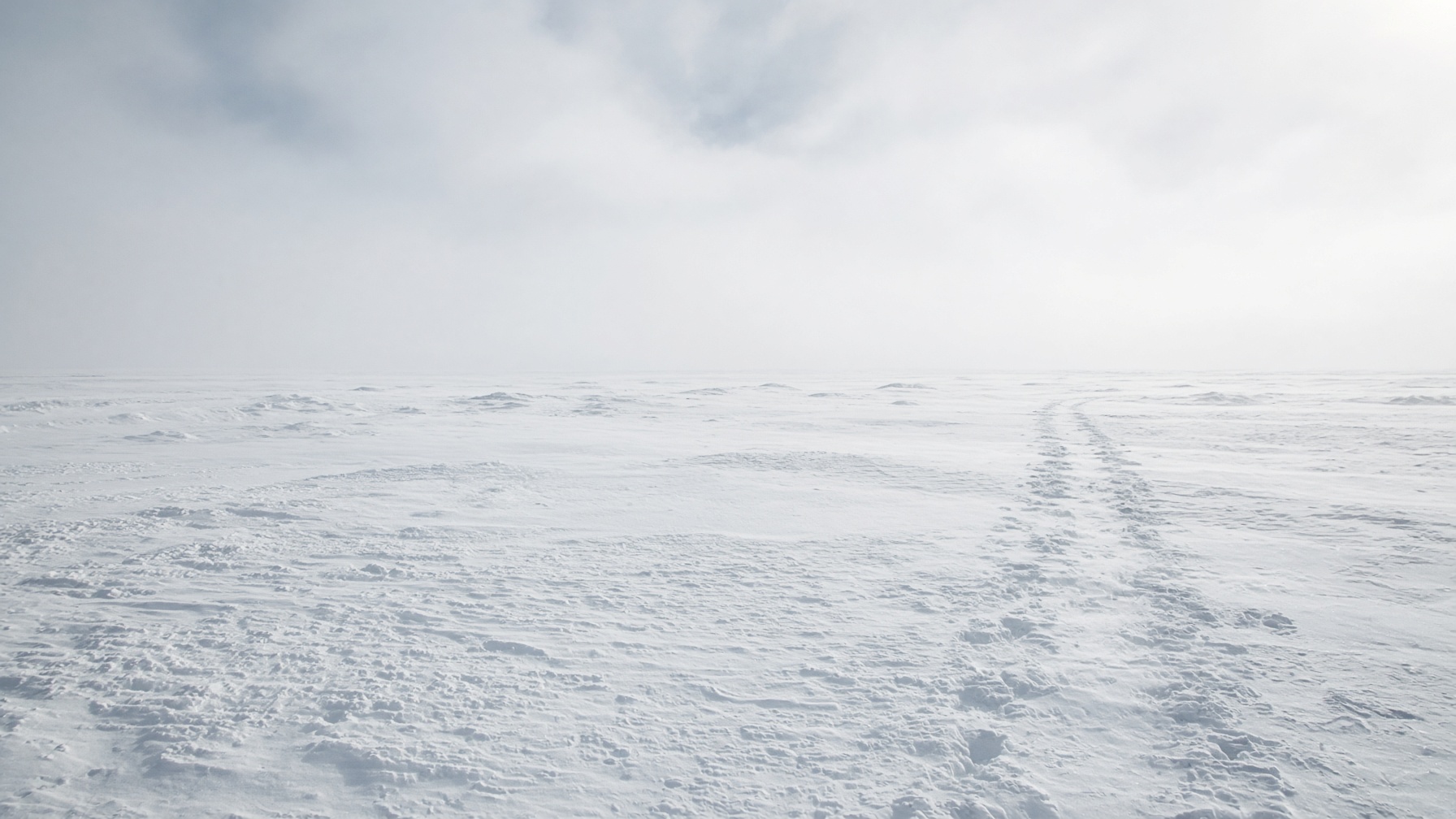
The track fades. The horizon does not get closer by staring.
88°23′ S, Antarctic Plateauending not yet
What they knew
- On 9 January 1909 they stood at 88°23′ S, 97.5 geographical miles from the Pole.
- Shackleton wrote: “We have shot our bolt, and the tale is 88° 23' S.”
- Rations had already been cut. Depots for the return were a math problem with no extra.
- Nimrod would not wait forever. Hut Point had a calendar.
What they could not know
- Whether the Pole was ten days away or fourteen, or not.
- Whether the return, even from here, would let all four live.
- What the world would say about a man who turned around.
The situation
In 1907 Ernest Shackleton took the small sealing ship Nimrod south. This is not the Endurance story. That ice came later. The British Antarctic Expedition wintered at Cape Royds on Ross Island. On 29 October 1908 four men left for the Pole: Shackleton, Jameson Adams, Eric Marshall, and Frank Wild. Ponies were meant to haul. Soft snow ended that plan. The men hauled. Rations were already being cut.
- 01Cape Royds, winter 1908The hut. The four men. The ship that would have to come back.
- 0229 October 1908The southern march begins. Ponies first. Then the men.
- 0388°23′ S, 9 January 190997.5 geographical miles from the Pole. We have shot our bolt.
- 04NorthThey turned. Hut Point, late February. Nimrod, 4 March. The four men lived.
The last miles were a short march without the sledge. Then they stopped. They planted a Union Jack and named the polar plateau after King Edward VII. The Pole stayed where it was. The food would not.
Emily Shackleton later recorded the only comment her husband made to her about not reaching the Pole: “a live donkey is better than a dead lion, isn’t it?” She said yes. They left it at that. The line is hers to report, not a speech on the plateau.
Love, if the word is allowed, is not a hymn here. It is the fact that other lives were on the rope. Continuing would have been a sentence passed on Marshall, Adams, and Wild as much as on himself.
Stopping may be orientation too.
What was at stake
Four lives, in that order, if the decision was honest. Reputation, if it was not. Marshall, Adams, and Wild did not get a separate press.
The next move
They planted a flag, named the plateau, and turned north. They reached Hut Point at the end of February. The whole party was aboard by 4 March 1909.
What they had
- A sledge
- A diary
- Each other
- A remaining arithmetic of food
What didn’t work
The original object: the Pole.
What happened
They lived. Amundsen reached the Pole in 1911. Scott reached it in 1912 and died on the return. Those facts were not available in 1909 and must not be smuggled into Shackleton’s reason. He did not spare Scott. He spared his own party, as far as he could see.
When is continuing no longer courage?
Private. No one else will see it.