
Encounter 13 · 13 of 42 · 26 September 1983
The alarm that was not
On the night of 26 September 1983 a Soviet officer saw five incoming American missiles on his screen. Protocol said report them. He waited.
Serpukhov-15, near Moscow · place approximate
Listen · Eve
Oko was a reporting post, not a launch key. Hollywood likes a lone finger on a button. His office was to say whether the machine was to be believed.
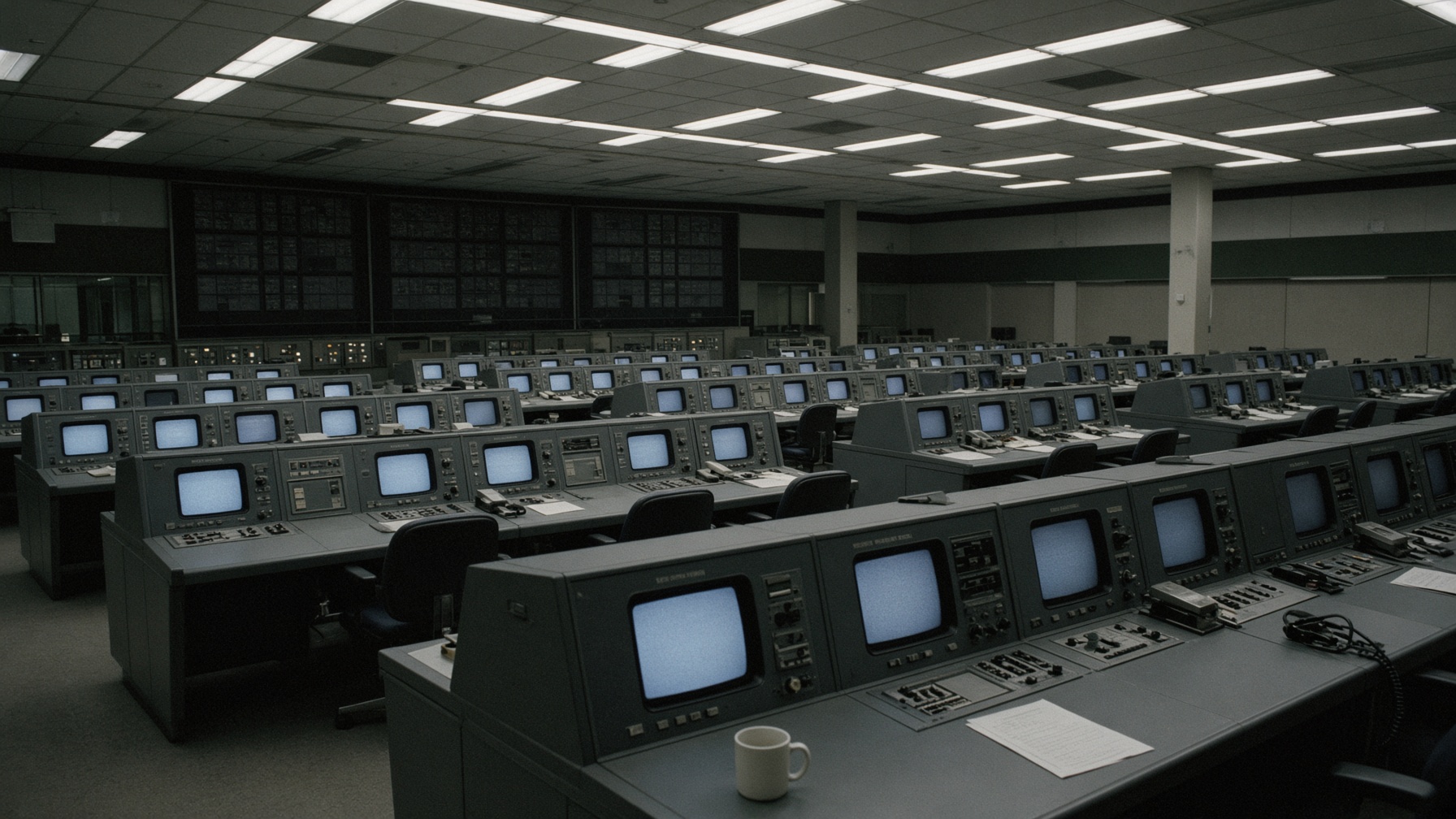
Shortly after midnight on 26 September 1983 the screen reported a launch, then four more. Doctrine, as he understood it, said a first strike would not be five missiles. He had minutes. He classified the alarms as a system malfunction and did not escalate an attack.
What they knew
- The computer said launch, then four more.
- The protocol was to report a confirmed attack.
- Three weeks earlier a Soviet fighter had shot down KAL 007. The pitch between the two countries was raw.
What they could not know
- Whether the screen was telling the truth.
- What would happen if he was wrong, in either direction.
- Whether the next person in the chain would wait.
1983
The cubicle
A duty shift. A machine’s first sentence. A refusal to treat it as the last. Ground radar had not yet spoken.
Later
The interviews
a funny feeling in my gutPetrov, afterward, to journalists. The feeling is not evidence of 1983. He also said a proper soldier might have passed the report up. That sentence is his, afterward. The Soviet internal paper is not fully open.
This is not the man-who-saved-the-world story. He waited. Radar agreed later. Fame is not the cubicle.
The protocol said report. He waited.
Private. No one else will see it.