
Encounter 33 · 33 of 42 · 1–5 December 1955
The leaflets
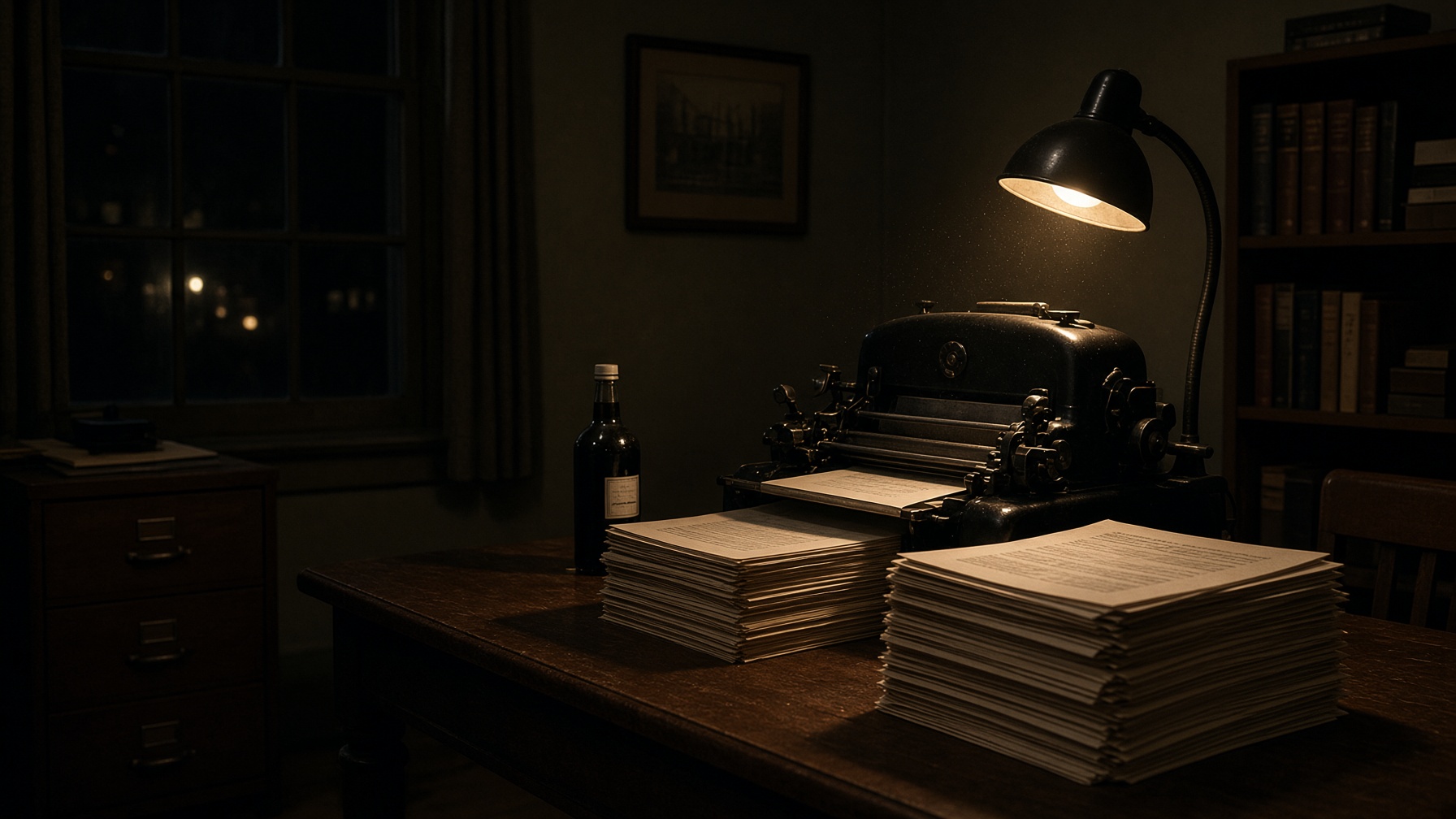
On the night of 1 December 1955 a professor and a few students ran a mimeograph until morning. They were calling for one day. They did not know about 381.
Alabama State College, Montgomery
What they knew
- The Council had been documenting bus humiliations for years.
- A one-day boycott could be called for Monday, the day of Parks’s trial.
- They had a mimeograph, paper, and a few people willing to stay.
What they could not know
- How many would walk.
- Whether the college would punish her.
- Whether Monday would be one day, or the start of more.
The situation
Rosa Parks was arrested on a Thursday. Jo Ann Robinson, English professor and president of the Women’s Political Council, had already been preparing for a bus boycott. That night she went to the college duplicating room.
The Women’s Political Council was not invented on Thursday. Robinson had written the mayor in 1954 about bus conditions. Claudette Colvin’s arrest in March 1955 was already in the city’s memory. This Guide withheld Colvin from an earlier founding set rather than flatten a fifteen-year-old’s courage into a lesson. Robinson was an adult who chose a machine.
The work is ordinary and not small: stencil, ink, collation, the risk of using campus equipment for a political act. Love, if the word is allowed, is the fact that the leaflets were for other people’s Monday mornings (maids, porters, students) not a speech about Robinson.
The Women’s Political Council will not wait for Mrs. Parks’s consent to call for a citywide bus boycott.Sense of the night’s decision as later told by Robinson; wording varies by retelling. Treat as memoir, not a surviving stencil.
What was at stake
Jobs, the college, and a city that had not agreed to be tested this way. Parks was already in custody. The leaflets could not undo Thursday.
The next move
Robinson and students cut stencils and ran tens of thousands of leaflets. Sources differ on the count. about 35,000 in some institutional tellings, more than 50,000 in others. By Friday afternoon the sheets were in churches, shops, and schools.
What they had
- A mimeograph
- A night
- A network the city had not been counting
- A sentence that asked for Monday
What happened
On Monday the buses were empty of the people who had been filling them. A meeting that night voted to continue. The boycott lasted 381 days. Robinson’s later memoir is the main first-person record of the duplicating room. The leaflets asked for a day. History later spent them as origin. They were a next move.
What is a leaflet for, the night before anyone walks?
Private. No one else will see it.