
Encounter 10 · 10 of 42 · 24–27 February 1975
The pause
In 1974 molecular biologists asked themselves to stop some of their own experiments. In February 1975 they met by the Pacific to decide what, if anything, could resume.
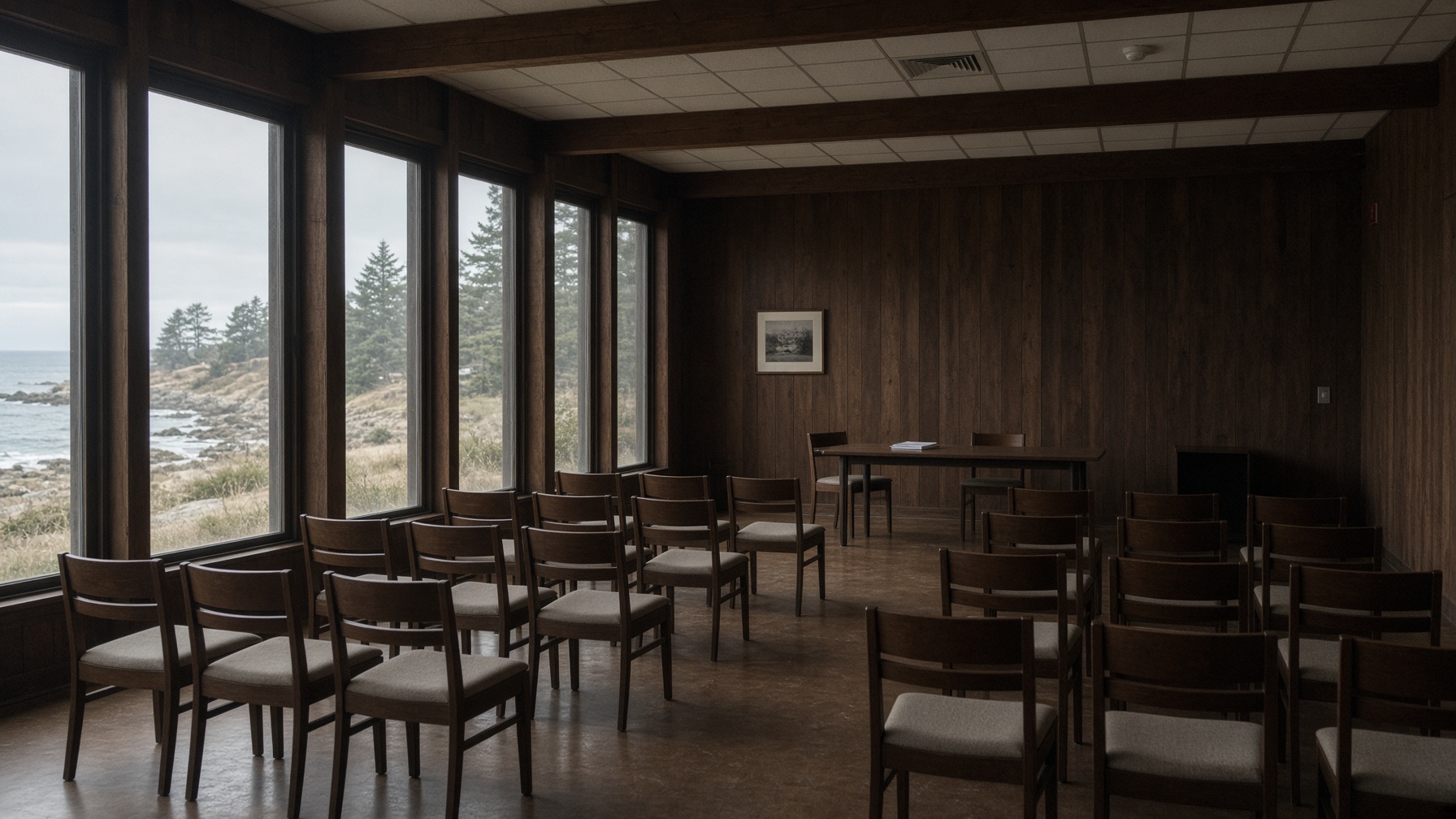
Asilomar Conference Grounds, Pacific Grove
Empty chairs. Who would you add before the vote?
What they knew
- The Asilomar conference of February 1975 gathered about 140 people: scientists from several countries, lawyers, journalists.
- The organizing circle included Berg, Singer, Baltimore, Richard Roblin, Sherman Weissman, Norton Zinder.
- On 27 February they ended the blanket pause and issued guidelines that sorted experiments by estimated risk.
What they could not know
- Whether recombinant DNA would, in fact, produce novel epidemics or ecological harm.
- Whether self-regulation would be trusted, or replaced by statute.
- What they were not competent to see about their own conflicts of interest.
What was at stake
At the table: the freedom and the hazard of a new technique. Off the table, and harder to count: anyone who might later live downstream of a mistake. Scientists bore career cost if they paused; they did not equally bear bodily risk if they did not.
The next move
They wrote a summary statement (Berg, Baltimore, Brenner, Roblin, Singer, 1975) and went home to work under rules they had helped write. Cambridge, Massachusetts, soon had its own public fight. The story of regulation is not only a beach.
The situation
Recombinant DNA techniques had made it possible to join genetic material across species. Some of the people who could do this were uneasy. In 1974 a group of scientists, including Paul Berg, called for a voluntary moratorium on certain experiments. Maxine Singer and Dieter Söll had already asked the National Academy of Sciences to take the problem seriously.
Stopping, here, was not defeat. It was a temporary refusal to treat “we can” as “we should, tonight.” The conference then restarted the work. That restart is part of the truth. This is not a parable about never going on.
Maxine Singer is easy to lose in a list of famous men. She had been in the problem from the 1973 Gordon Conference letter with Dieter Söll. About 140 people gathered at Asilomar: scientists from several countries, lawyers, journalists in the room on purpose. On 27 February they ended the blanket pause and issued guidelines that sorted experiments by estimated risk. People who might later live downstream of a mistake were not equally in the chairs.
They wrote a summary statement and went home to work under rules they had helped write. Cambridge, Massachusetts, soon had its own public fight. Biotechnology became an industry. Whether Asilomar was wisdom, public relations, or both is still argued. The fact of the pause is not argued.
What they had
- A moratorium already in force among many labs
- A coastline meeting hall
- Journalists in the room, on purpose
What happened
Work resumed, constrained. Biotechnology became an industry. Whether Asilomar was wisdom, public relations, or both is still argued. The fact of the pause is not argued.
Who should be in the room when a technique pauses. and who is missing?
Private. No one else will see it.